Moonbird vs Pulsetto vs CalmiGo vs meditation apps
By the moonbird team · Prices and terms checked August 2026
The short answer
You want a screen-free coach with measurement and published research
moonbird
You want your hands free
Pulsetto
You want guided content at the lowest starting price
Meditation apps
You want a different pacing style
CalmiGo
The full comparison is in the table below.
These four tools take different routes to the same goal: helping you calm down. Moonbird guides slow breathing with movement in your hand and reads your heart rate while you breathe. Pulsetto sends electrical pulses toward the vagus nerve through the skin of the neck. CalmiGo paces your exhale. Meditation apps guide you through your phone.
The biggest practical differences are the cost over several years and what each product needs to keep working. Moonbird works out of the box, with no required refills and no required subscription. Pulsetto uses electrode gel and pairs with a phone app. Apps charge a recurring fee. This page compares all four honestly, including where another option may suit you better.
The comparison at a glance
What we compared
moonbird
Pulsetto
CalmiGo
Meditation apps
How it works
Tactile pacer in your hand, with heart rate and HRV sensor
Electrical stimulation at the neck, with conductive gel
Exhale pacer with feedback and calming scents
Guided audio and video on your phone
Screen-free use
Yes, fully
Needs the phone app
Yes, app optional
No
Subscription
None required (optional app €59.99/yr)
App $15/mo or about $139/yr after trial
Plans: $218/yr or $349 lifetime
Headspace €57.99/yr, Calm $79.99/yr
Refills to keep buying
None
Electrode gel, about $81 to $102/yr
Scent plates, included in plans
None
Three-year cost
$179.99, once
About $520 to $575, or $900 with the app
About $654 (yearly) or $349 + refills (lifetime)
About €174 to $240
In the box
Device, charging cable, pouch, guide
Device; gel refills $51 per box
Device, app and scent plates, per plan
No box, your own phone
Guarantee and warranty
30-day returns, 2-year warranty
30-day returns, 2-year warranty
30-day returns; warranty tied to plan
Free trials, terms vary
Trustpilot score
4.7 / 5 (897 reviews)
4.2 / 5 (3,391 reviews)
3.7 / 5 (182 reviews)
Varies by app
Children’s version
Yes, moonbuddy ($99.99)
No
No, sold for ages 6 and up
Some kids content
Insurer reimbursement
Five European insurers
–
US veteran programs
–
HSA/FSA eligible (US)
Yes
Yes
Yes
Varies by app
Pulsetto and CalmiGo prices and terms as listed on their own sites in August 2026, in US dollars. App prices as listed by Headspace (euro) and Calm (US dollar). Moonbird prices come live from our store. A dash means we found nothing to list when we checked. Spot something outdated? Tell us and we will correct it.
What is moonbird?
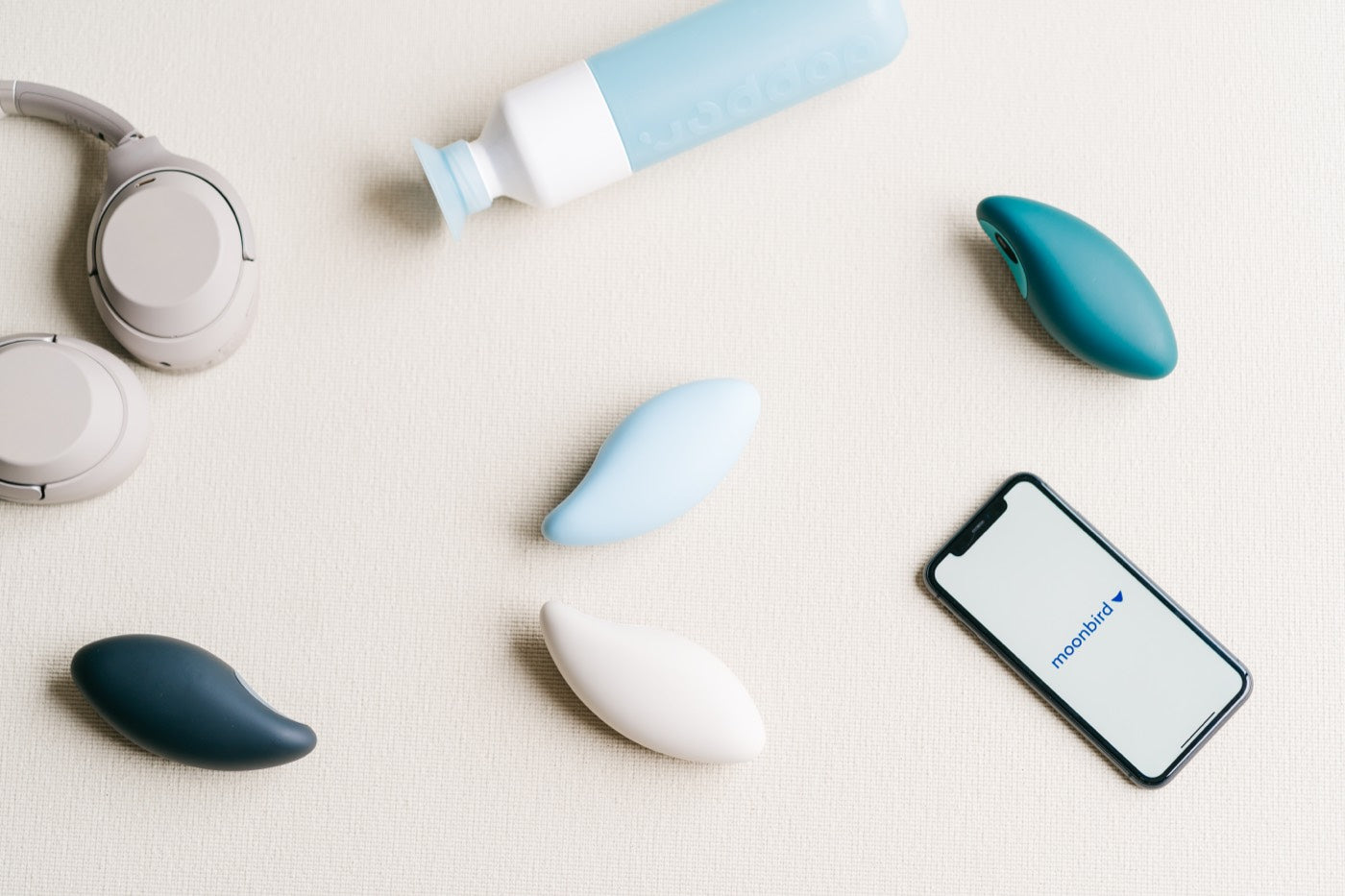
Moonbird is a handheld breathing coach made by moonbird BV in Antwerp, Belgium. The device slowly expands and contracts in your hand, and you match your breath to the movement. An optical sensor reads your heart rate and heart rate variability (HRV) during each session. It works fully without an app or subscription. For children there is moonbuddy, a simplified version with four preset rhythms.
01
How does each one work?
moonbird
Moonbird works through touch. The device expands and contracts in your hand, and you slow your breath to follow the movement. An optical sensor reads your pulse during the session, so the optional app can show how your heart rate variability responds. Everything it does is observable: you feel the pace, and you can check the measurements.
Pulsetto
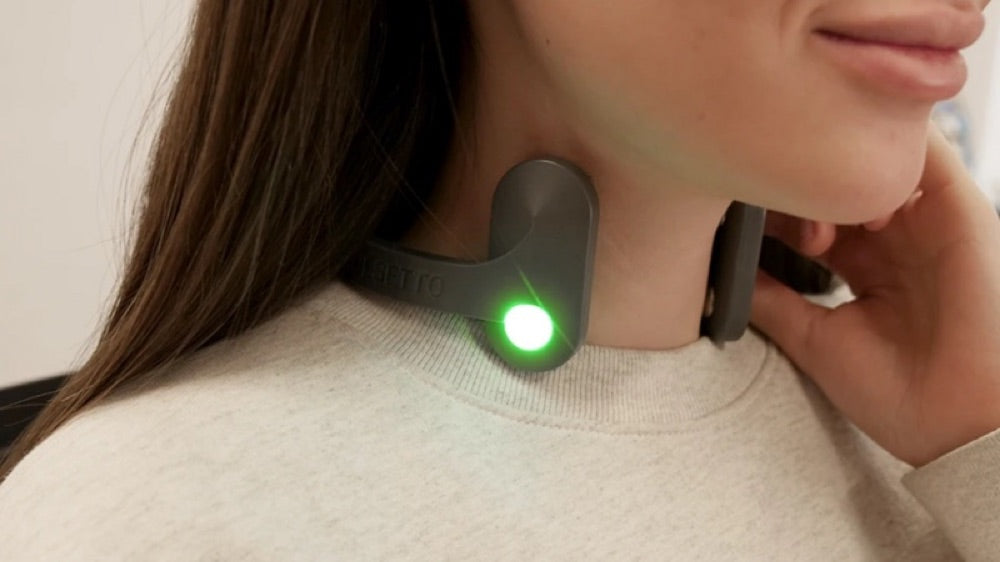
Pulsetto works through electrical stimulation. You wear it around the neck, apply conductive gel to the skin, and the device sends electrical pulses toward the vagus nerve. You control it from the phone app.
CalmiGo
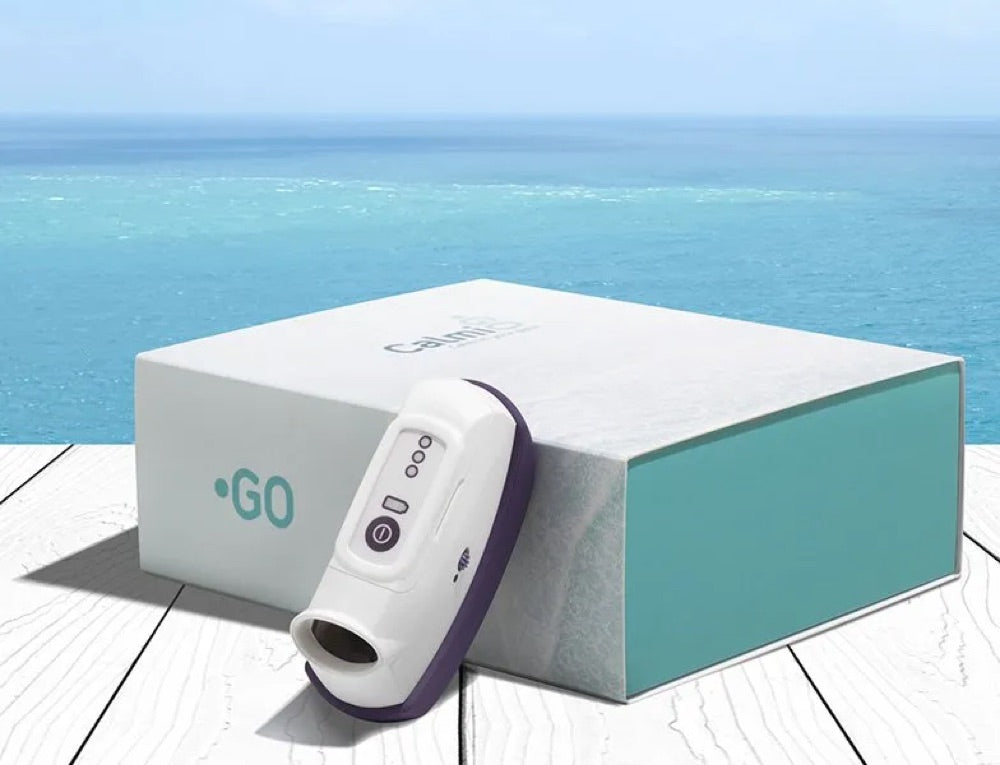
CalmiGo is a handheld device that paces your exhale, with multi-sensory feedback and a calming scent element. You buy it as a plan: device, companion app and scent refills together, from $218 per year, or $349 once for lifetime access.
Meditation apps
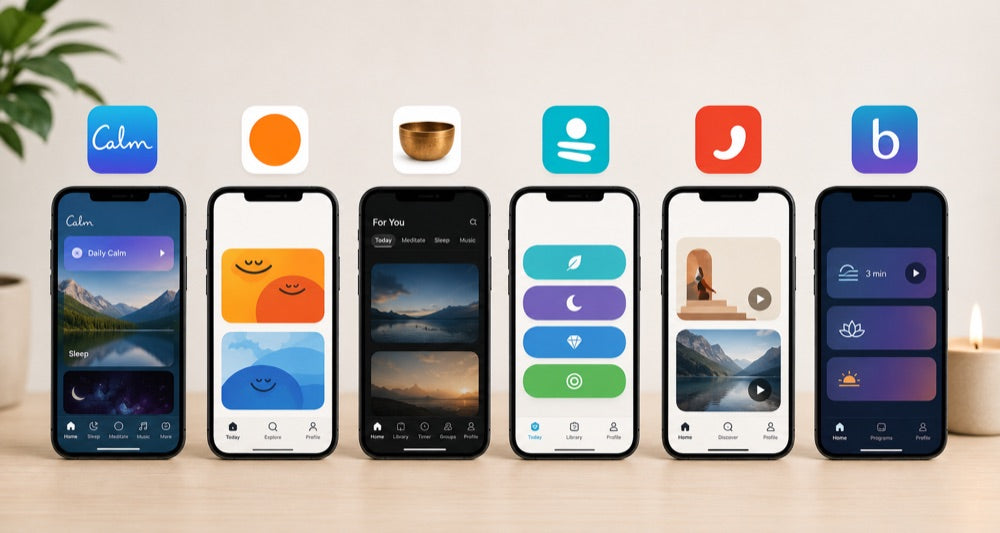
Meditation apps guide you with audio and video: breathing exercises, meditations, sleep stories. The guidance lives on your screen and in your ears rather than in your hand.
One honest note that applies to all four: slow breathing itself is free. You can practice it with nothing at all. A device or an app earns its place by making the practice easier to start and easier to stay with.
02
What does each really cost over three years?
The sticker price tells you little. What matters is the cost of owning the thing for years. Here is the math.
moonbird
Device
$179.99, once
Refills
None
Subscription
Optional, €59.99 per year, not required
Three-year total$179.99
Pulsetto
Device
$269 (listed from $469)
Electrode gel
$81 to $102 per year
Premium app
$15 per month or about $139 per year after a 30-day trial
Three-year total$520 to $575 with gel alone; about $900 with the app
CalmiGo
Yearly plan
$218 per year, scent refills included
Lifetime plan
$349 once, 1-year warranty
Scent refills
Packs of $16 to $34 outside a plan
Three-year totalAbout $654 (yearly plan) or $349 plus refills (lifetime)
Meditation apps
Device
None, you use your phone
Headspace
€57.99 per year (listed full price)
Calm
$79.99 per year
Three-year totalRoughly €174 to $240
Pulsetto sells in US dollars and moonbird in euros. We show each brand’s own listed prices instead of converting them. Prices checked August 2026.
03
What evidence sits behind each option?
Moonbird has been studied in six studies with eight research institutions. In a published study, people with sleep problems reported 27% better sleep quality after one month of use. A separate peer-reviewed study found measurable HRV improvement while using moonbird. On top of that sit 2.1 million real-world breathing sessions from more than 61,000 users. The full list is on our science page. Read the science
Slow breathing as a practice is well studied in its own right. Breathing at around six breaths per minute has been researched for its effect on heart rate variability. That research supports the practice itself, whichever tool you use for it.
Pulsetto publishes company-run research on its site. When we checked in August 2026, we could not find peer-reviewed published trials of the device. Check their science page for the current status, as this can change.
CalmiGo cites eight clinical studies on its site; see their science page for the details. For individual meditation apps, the evidence varies by app, so check the app’s own research page.
04
When might another option suit you better?
An honest comparison includes the cases where we are not the best pick.
You want your hands free
Pulsetto is worn at the neck, so your hands stay free while you type or do chores. Users often name this as its main practical advantage. Moonbird rests in your hand during a session.
You want guided content at the lowest starting price
A meditation app is the cheapest way to start, and many have free tiers. If you mainly want a large library of guided meditations and sleep stories, an app is the better fit.
You want a different pacing style
CalmiGo is also screen-free, paces your exhale and adds a calming scent. If that approach appeals to you, it is worth a look. It is sold as a plan, so compare the three-year cost rather than the sticker price.
You already have a practice that works
If you meditate consistently with an app, or pace your breathing on your own, you may not need a device at all. Keep doing what works.
Competitor prices, terms and review scores were checked on the brands’ own sites (pulsetto.com, calmigo.com, headspace.com, calm.com) and on Trustpilot in August 2026. Spot something outdated? Email hello@moonbird.life and we will correct it.
Frequently asked questions
Is moonbird a good Pulsetto alternative?
They do different things, so it depends on what you want. Pulsetto delivers electrical vagus nerve stimulation and uses gel and a phone app. Moonbird guides slow breathing, works screen-free, needs no refills or subscription, and has peer-reviewed research behind it. If you specifically want electrical stimulation, moonbird is not that.
What does moonbird cost over three years?
Moonbird costs $179.99, once. After that there is nothing you must re-buy: no refills and no required subscription. The optional premium app costs €59.99 per year, and the device works fully without it.
What does Pulsetto cost over three years?
About $520 to $575 for the device plus electrode gel, and about $900 if you keep the premium app subscription. That is based on the prices listed on pulsetto.com in August 2026: $269 for the device, $81 to $102 per year in gel, and about $139 per year for the app.
Does moonbird need a subscription or refills?
No. The device works fully out of the box, and there is nothing you need to re-buy. The premium app (€59.99 per year) is optional and adds personalisation and progress insights.
Which option works best for children?
Moonbuddy is the children’s version of moonbird: four preset breathing rhythms, one button, no sensor and no screen. Pulsetto has no children’s version. Some meditation apps offer children’s content, though that keeps a screen in the bedtime routine.
What is the best breathing device?
There is no single best device, and marketing volume is not evidence. Choose by what you want: guided content (an app), hands-free wear (Pulsetto), or a screen-free pacer with measurement and published research (moonbird). Then check the three-year cost, not the sticker price.
Is moonbird reimbursed by health insurers?
Yes. Five European insurance companies reimburse or endorse moonbird, including CM and Helan in Belgium. Ask your insurer directly, or contact us and we will point you to the right form. In the United States, moonbird is HSA/FSA eligible: you can pay with your HSA or FSA funds at checkout through Truemed.
Start your journey into breathwork
Less stress, better sleep, more calm. Try moonbird with zero risk: if it doesn't work for you, send it back. No questions asked.
30-day trial periodTry it risk-free at home
100% money-back guaranteeNot convinced? Full refund